Mastering the Apartment Lifestyle with a "Zoned" Layout
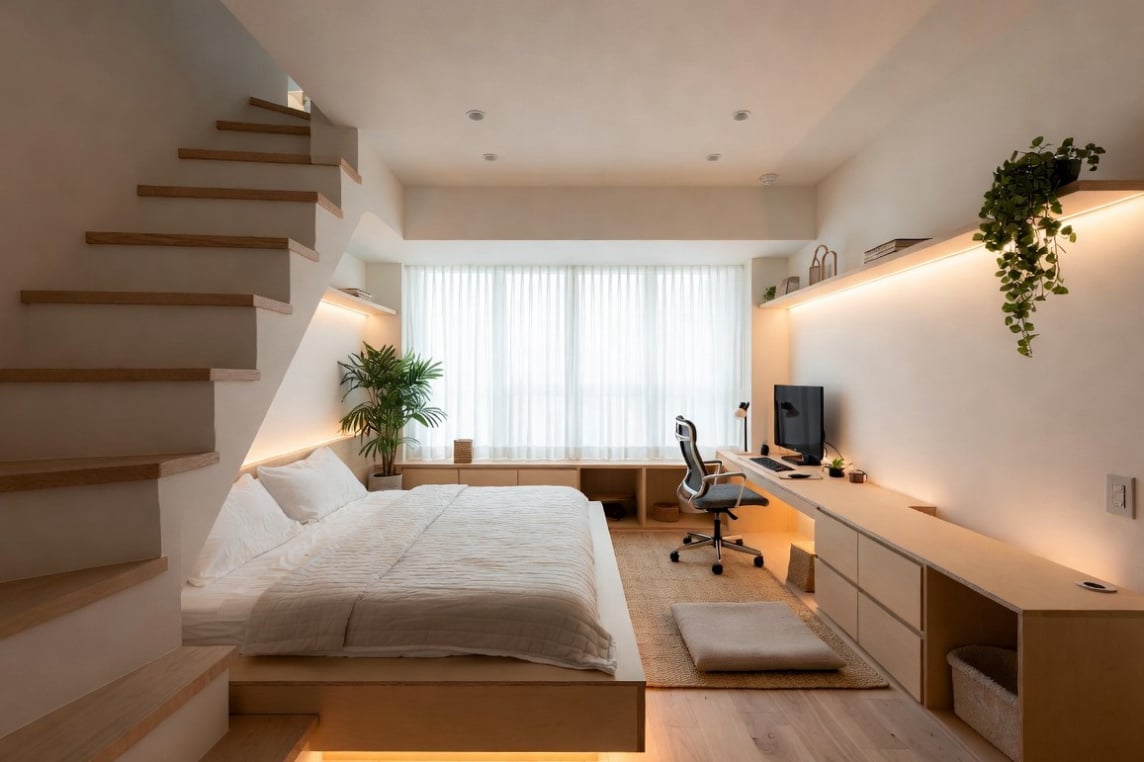
Creating distinct zones within a single room is the secret to feeling like you have more space than you actually do. In compact living, the living room often doubles as the dining room, and the bedroom may also be the home office. Without clear boundaries, your brain perceives everything as messy and overwhelming. Zoning solves this by using visual and physical cues to separate activities. This approach is fundamental to a successful apartment lifestyle because it mimics the function of separate rooms without requiring walls. You will feel more organized, productive, and relaxed once each area has a defined purpose.
Lighting is one of the simplest and most effective tools for zoning a cozy apartment. Instead of relying on a single overhead light, introduce three distinct light sources. Use a warm, dim lamp for your sleeping zone, a bright white desk lamp for your work zone, and string lights or a floor lamp for your relaxing zone. The brain instinctively understands that different lighting means different activities. This is a powerful small apartment tip because it costs very little but changes the entire feeling of the space. Your apartment lifestyle will feel richer and more intentional when light guides you from one zone to another.
Rugs are another essential element for successful zoning in compact living. Place a large rug under your sofa and coffee table to define the living zone. Use a smaller, differently textured rug under your desk for the work zone. Leave the floor bare or use a thin mat near the door for the entry zone. These soft boundaries tell your feet and your eyes where one zone ends and another begins. In a cozy apartment, rugs also add warmth and sound absorption, which is especially valuable when you have neighbors above or below. This small apartment tip works beautifully in studio layouts where everything shares one open area.
Furniture placement can either fight against zoning or support it completely. Arrange your sofa or bookshelf so that its back faces your sleeping area, creating a natural visual barrier. In compact living, even a low shelf or a tall plant can act as a room divider without blocking light. This technique allows you to lie in bed without staring at your desk or your dishes. Mastering the apartment lifestyle means learning that you do not need walls—just smart angles and intentional placement. A cozy apartment feels larger when your eyes cannot see all three zones at once from a single viewpoint.
For renters who need more privacy, consider using a tension rod and a light curtain to separate the sleeping zone from the living zone. This solution requires no drilling and can be opened during the day to let light flow through. In compact living, flexibility is key, and a curtain divider offers exactly that. You can close it at night to create a true bedroom feeling and open it in the morning to restore an open-plan layout. This is one of the most advanced small apartment tips for anyone serious about improving their apartment lifestyle. Your cozy apartment will suddenly feel like it has two separate rooms.
Color coordination also plays a role in successful zoning, though it should be subtle. Use matching accent colors within each zone to reinforce its identity. For example, keep blue cushions and a blue throw blanket in your sleeping zone, while using green plant pots and green coasters in your living zone. The brain picks up on these color families unconsciously, making the zones feel natural and distinct. In compact living, this psychological trick is invaluable. By combining lighting, rugs, furniture placement, dividers, and color, you will fully master the apartment lifestyle and enjoy a cozy apartment that serves every part of your daily life.